

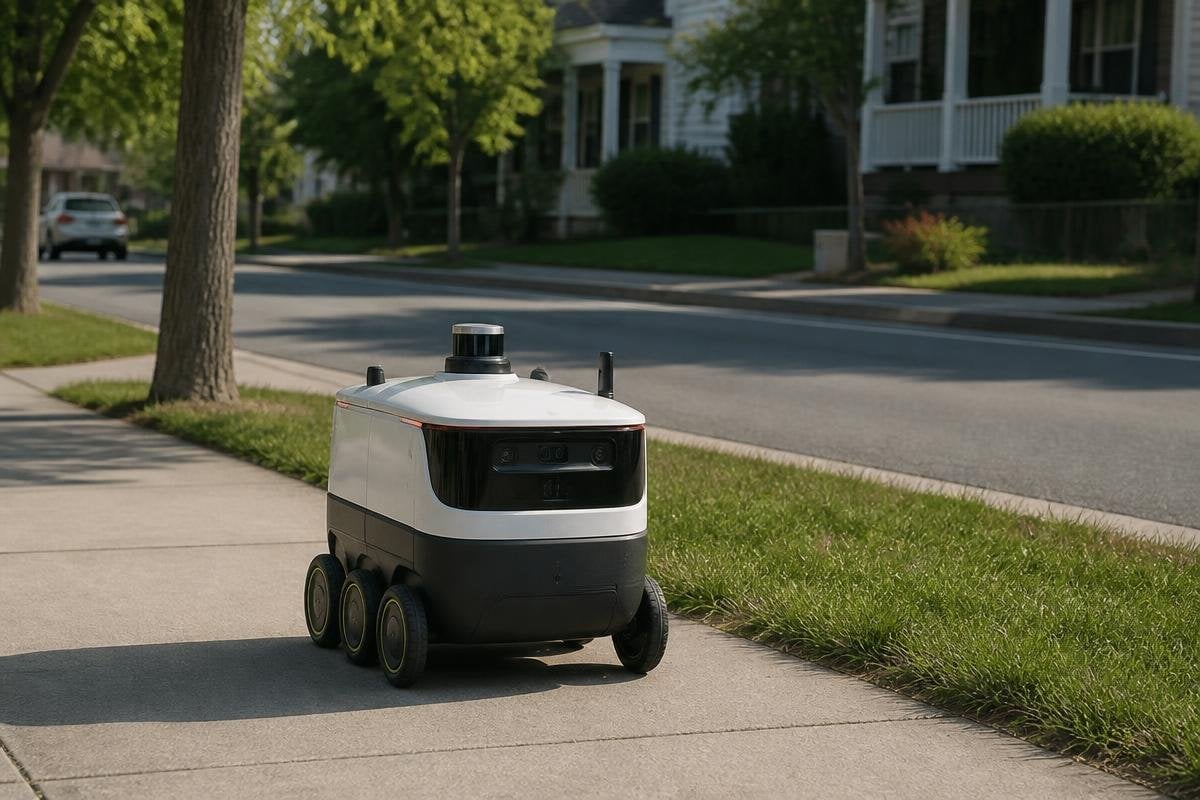
A delivery vehicle becomes a robot when it can sense its route, choose its next move, and stop safely without constant human control. That change can happen inside a van, on a sidewalk robot, or in a small road vehicle built for short trips.
Quick read
- Cameras, LiDAR, GPS, and wheel sensors help the vehicle locate people, objects, and road edges.
- Remote staff still matter when the vehicle meets a situation its software cannot handle.
- The hardest part is safe operation around people, traffic, weather, and damaged roads.
The vehicle has to see its route
The first job is sensing. Cameras read signs, lane lines, people, and packages. LiDAR sends out light pulses to measure nearby objects, while radar can detect objects in poor visibility. GPS gives the vehicle a rough position, and wheel sensors track how far it has moved.
Those sensors feed a map of the vehicle’s surroundings. Software then separates fixed objects, such as a curb, from moving objects, such as a person crossing the route. The vehicle needs this information many times per second because a safe path can change before it reaches the next driveway.
Localization is another requirement. That means working out where the vehicle is on a map. GPS can help on an open road, but tall buildings, trees, and covered loading areas can weaken the signal. The vehicle may compare camera and LiDAR readings with its stored map to keep its position.
Wheels make the problem harder
A robot on wheels has to control speed, steering, and braking while carrying a changing load. A full cargo box weighs more than an empty one, so the motor and brakes face different demands during the same route.
Road vehicles also deal with lane markings, parked cars, cyclists, traffic lights, and human drivers.
Sidewalk vehicles face different problems: curb ramps, narrow paths, loose gravel, pets, and people who stop in front of them. The hardware may look simple, but each surface changes how the wheels grip and turn.
The delivery task adds another decision. The vehicle must reach the right address, stop in a safe place, and let a person collect the package. A locked cargo box can confirm that the correct compartment opened, but it cannot fix a bad drop-off location.
Remote help fills the gaps
Most delivery robots still need a link to a remote operator or support team. The operator may not drive every metre of the route. They can review a live view, choose from safe route options, or help the vehicle continue after an unusual event.
This setup changes the work rather than removing people from it. One operator may watch several vehicles, but the safe number depends on route length, traffic, weather, and the type of help each vehicle needs. A route with many blocked paths will demand more attention than a controlled site.
Those operator choices are easier to judge when a report names the vehicle, route, and support plan. Robot 24 gives you a place to check those details before the connection fails and local controls have to take over.
The link itself is another weak point. A lost connection should lead to a safe stop or a slow return to a known area. The vehicle also needs local controls for braking, steering, and collision avoidance, since waiting for a remote command can take too long near a person.
Where the limits show up
Weather is a direct test of the sensor package. Rain can cover camera lenses, bright sunlight can affect images, and snow can hide road edges. Construction zones create a different problem because the map may no longer match the street.
People add uncertainty that software cannot remove. Someone may step behind the vehicle, move a barrier, or leave a bag across a sidewalk. A system can react to these events, but its safe behaviour depends on the speed of the vehicle, the range of its sensors, and the quality of its control software.
The business case has limits too. Even an automated vehicle still needs charging, cleaning, repairs, insurance, package loading, and staff who can respond when it stops. If those tasks cost more than the human delivery work they replace, the robot has no useful role on that route. I’d choose a robot route only after measuring those costs on the actual streets it will use.
A practical route check
Before choosing a delivery robot, check these points:
- Route shape: Record road crossings, curb cuts, loading areas, and places where people gather.
- Sensor view: Check how cameras and LiDAR perform in rain, shade, glare, and tight spaces.
- Safe stop: Confirm what the vehicle does after a blocked path, lost link, or sensor fault.
- Human support: Set a response time for remote help and a plan for recovery after a stop.
- Package handoff: Test address checks, cargo access, and the process for a failed delivery.
- Operating cost: Count power, repairs, staff time, insurance, and routine site work.
The next useful measure is not how many delivery vehicles can move without a driver. It is how many complete deliveries they finish safely on one defined route, with the full support cost included.